Introduction
Walk down any supermarket aisle, and you'll see products labelled "biodegradable," "compostable," "recyclable," and "plant-based." But do these terms actually mean the same thing? The short answer is no. Understanding the difference is essential for making truly sustainable choices.
What Does "Biodegradable" Mean?
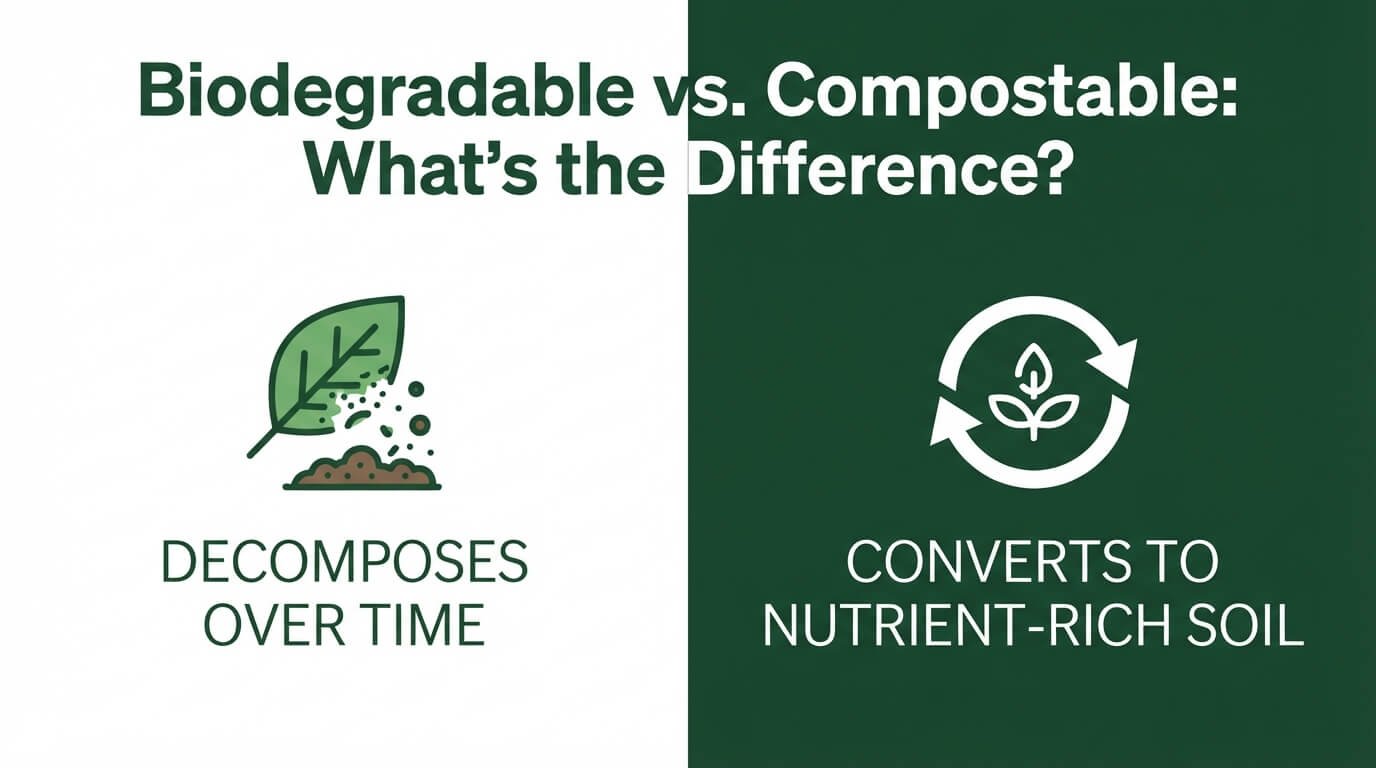
Biodegradable simply means that a material can break down naturally through the action of microorganisms (bacteria, fungi, etc.) into water, carbon dioxide, and biomass. However, there is no time limit on this process. A plastic bag can be technically biodegradable, but it may take hundreds of years to decompose.
"Biodegradable does not mean environmentally friendly. It just means it will eventually break down—sometimes too slowly to be useful." — Ellen MacArthur Foundation
What Does "Compostable" Mean?
Compostable materials go a step further. They must break down within a specific time frame (typically 90 days) under composting conditions, leaving no toxic residue, and contributing to a nutrient-rich soil product called humus. Compostable packaging is certified to meet standards like ASTM D6400 or EN 13432.
Key Differences at a Glance
| Feature | Biodegradable | Compostable |
|---|---|---|
| Timeframe | Varies (undefined) | Defined (usually 90 days) |
| Residue | May leave harmful residues | Leaves only CO2, water, and biomass |
| Certification | Not regulated | ASTM D6400, EN 13432 |
| Eco Benefit | Potentially greenwashing | Genuinely beneficial to soil |
Why This Matters for Your Business
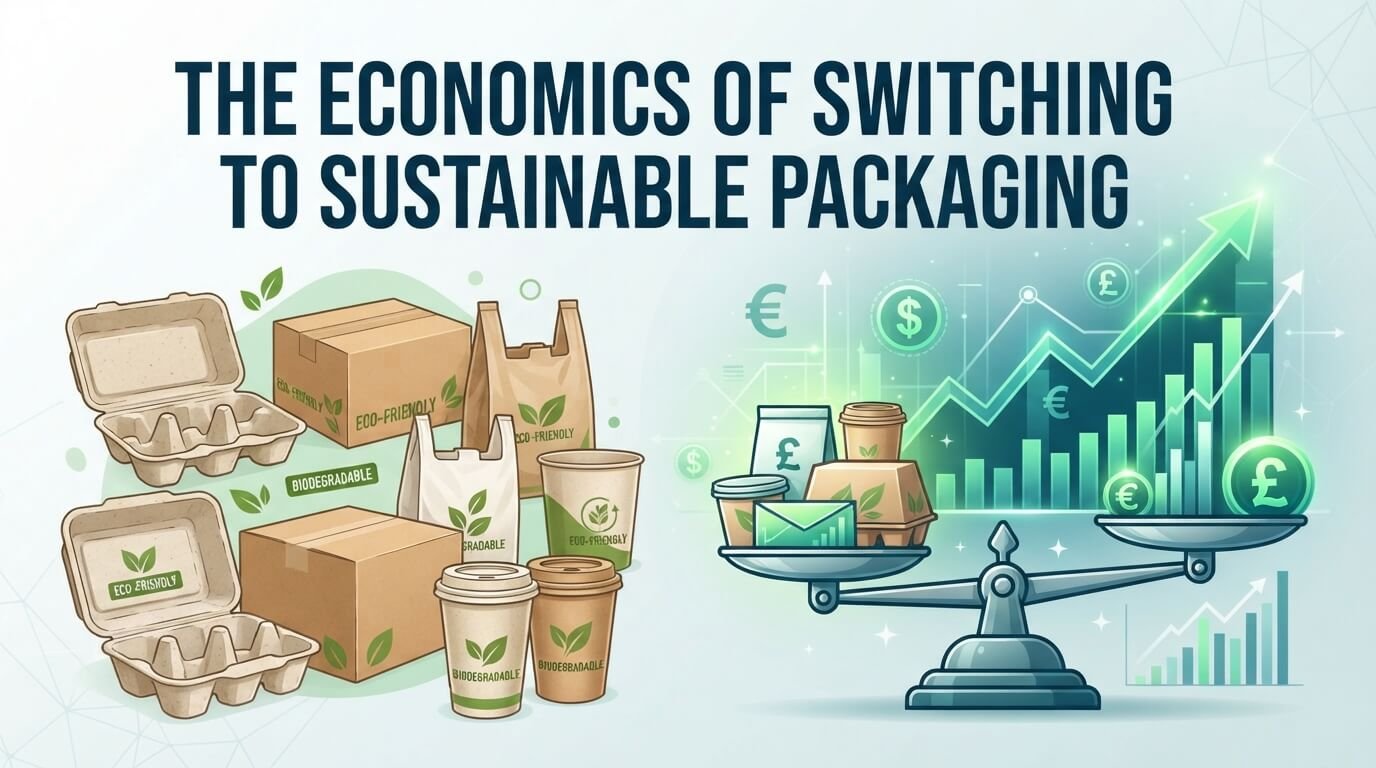
Choosing compostable packaging ensures that your waste can be processed in industrial composting facilities, reducing landfill burden and creating valuable soil amendments. On the other hand, "biodegradable" plastic often ends up in landfills where it degrades anaerobically, releasing methane—a greenhouse gas 25 times more potent than CO₂.
What Greeneye Ecopack Offers
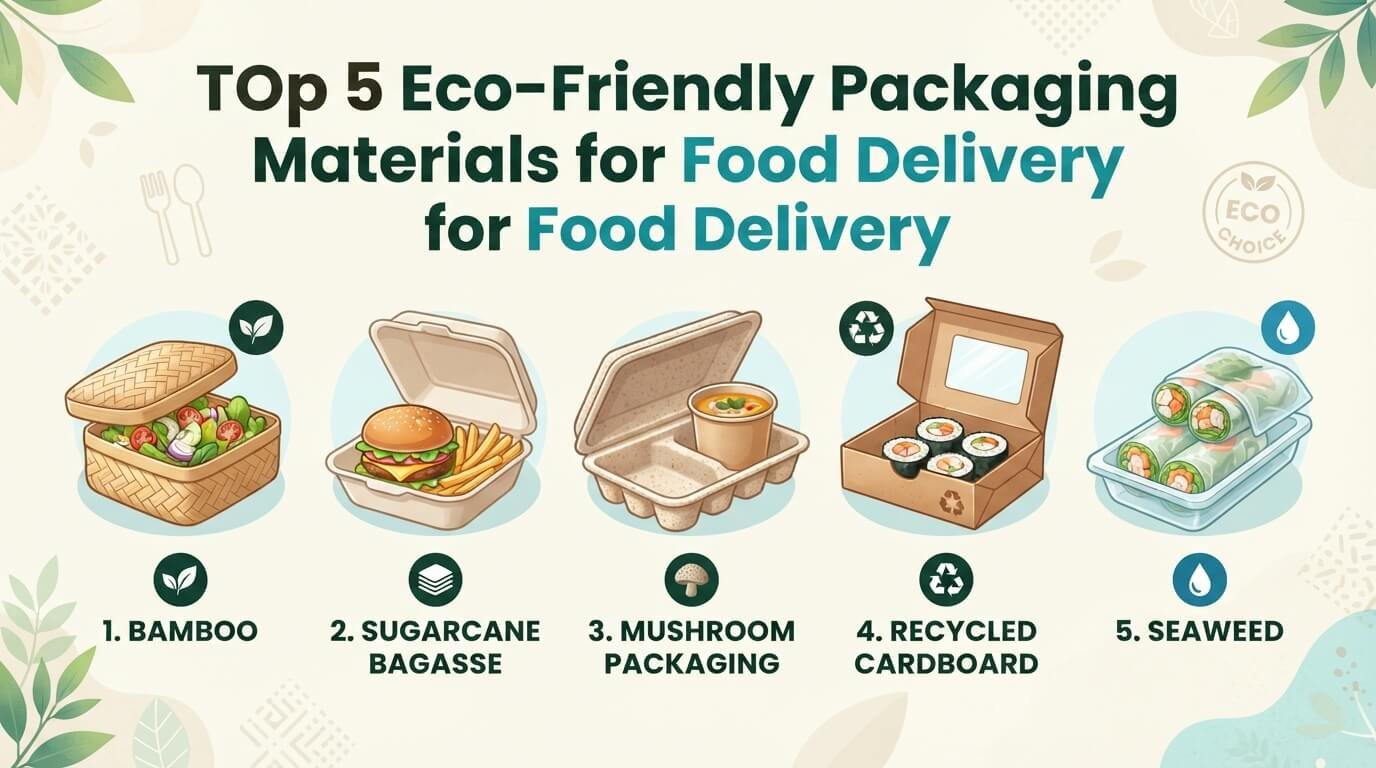
All our products are 100% compostable, certified to break down within 90 days in commercial composting systems. We use bagasse, kraft, and bamboo—materials that leave no toxic footprint.
Your Next Steps
When sourcing sustainable packaging, look for certifications like TÜV Austria "OK Compost" or BPI (Biodegradable Products Institute). At Greeneye Ecopack, we are proud to offer products that are genuinely good for the planet—not just greenwashed.