Introduction
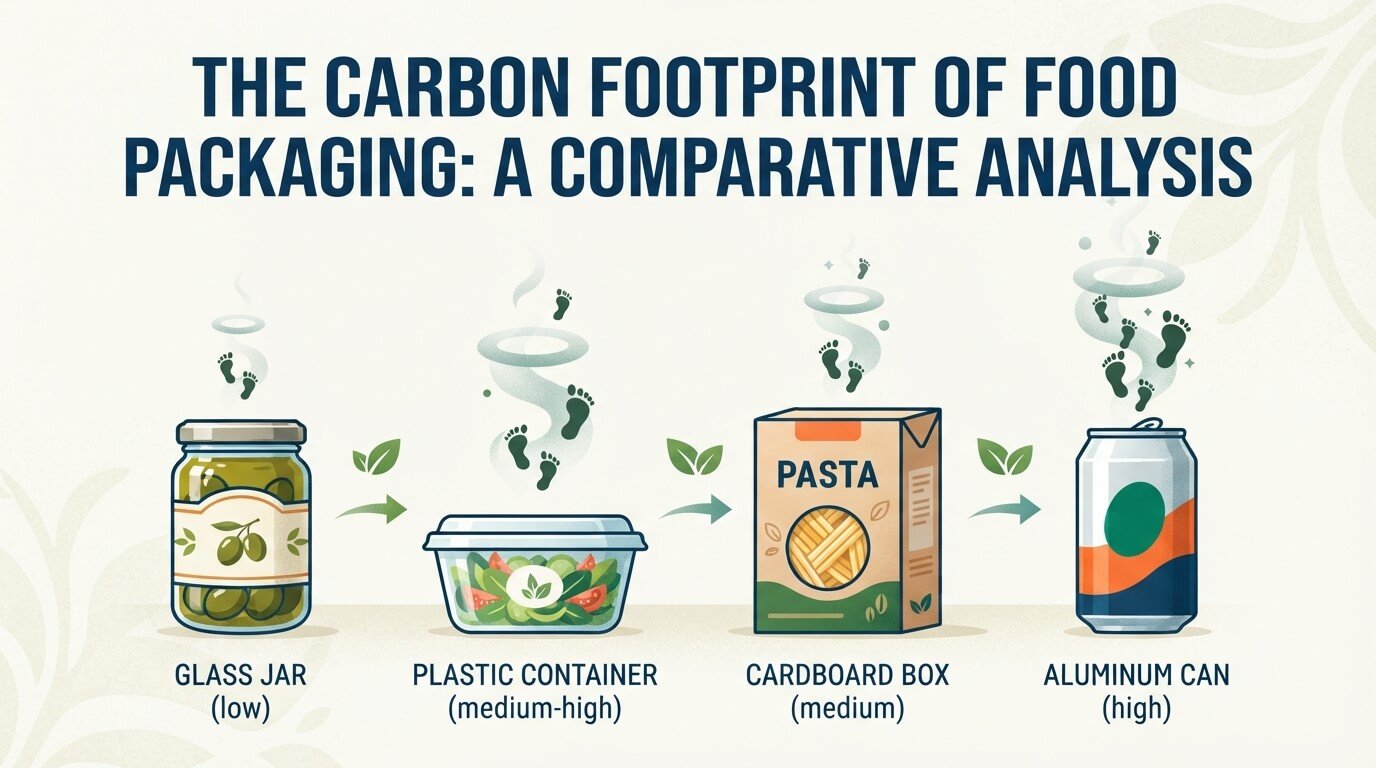
When we talk about sustainability, carbon footprint is one of the most important metrics. But which packaging material actually has the smallest environmental impact? Many assume that glass or aluminum are eco‑friendly, but the data tells a different story.
Life‑Cycle Assessment (LCA) Methodology
We analysed peer‑reviewed LCA studies that compare the global warming potential (GWP) of different packaging types over their full life cycle—from raw material extraction to production, transportation, use, and end‑of‑life disposal.
Comparison of Materials (kg CO₂e per 1000 units)
| Material | GWP (kg CO₂e) | Recyclability | Compostability |
|---|---|---|---|
| Plastic (PET) | 1.5 – 2.0 | Low (20‑30% actually recycled) | No |
| Glass | 5.0 – 8.0 | High (but heavy transport increases emissions) | No |
| Aluminum | 10.0 – 15.0 | High (but energy‑intensive production) | No |
| Bagasse (Sugarcane) | 0.8 – 1.2 | Low (compostable) | Yes (90 days) |
| Kraft Paper | 0.9 – 1.3 | High | Yes (home/industrial) |
| PLA (Corn‑based) | 1.2 – 1.6 | Low (only industrial compost) | Yes (industrial) |
Source: European Commission JRC Technical Reports, 2023.
Key Findings
- Bagasse and kraft paper have the lowest carbon footprint among commonly used food packaging materials.
- Plastic is not "low‑carbon" when you account for its low recycling rates and long degradation period.
- Glass and aluminum are heavy, require energy‑intensive production, and transport emissions are significant.
Why Bagasse and Kraft Excel
Bagasse is a by‑product of sugarcane farming, so it uses waste biomass that would otherwise be burned or discarded. Kraft paper comes from sustainably managed forests. Both materials sequester carbon during growth and break down without releasing harmful gases.
Make the Smart Choice
Switching to bagasse or kraft packaging is one of the most impactful decisions you can make for your business and the planet. At Greeneye Ecopack, we offer premium bagasse and kraft products that are affordable, durable, and truly sustainable.
Ready to reduce your carbon footprint? Explore our catalog and join the green revolution.